Spot vs. Futures Trading: Key Differences Every Crypto Trader Should Know
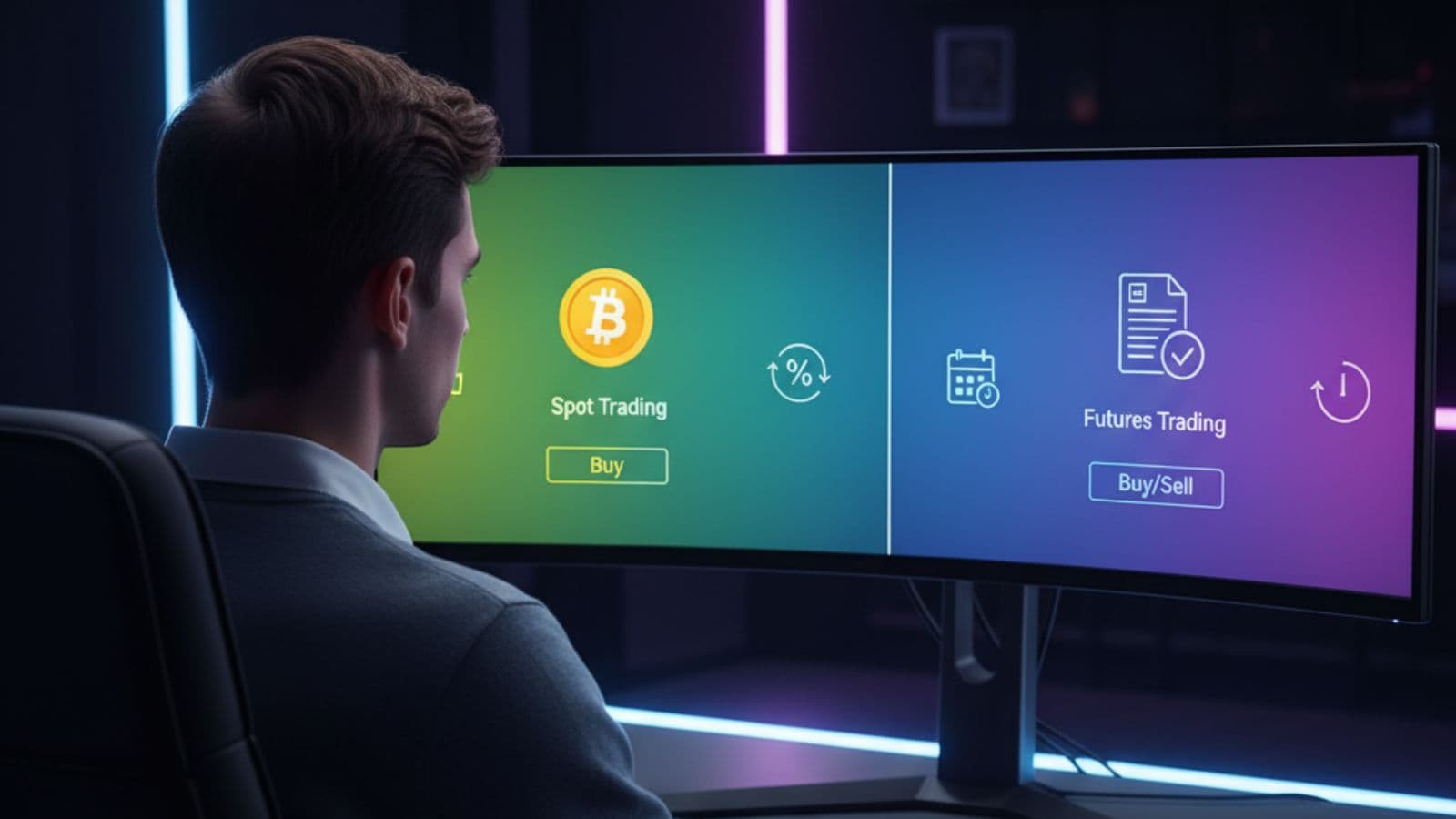
Cryptocurrency trading offers diverse avenues for participation, and two of the most fundamental are spot trading and futures trading. We’re often asked about the best approach. Each method provides unique opportunities and carries distinct risks. Understanding these differences is crucial for anyone looking to navigate the volatile crypto markets effectively. Let’s explore how they work and what makes them unique.
In this article, we’ll break down spot and futures trading. We’ll cover their mechanics, key advantages, and potential drawbacks. By the end, you’ll have a clearer picture of which trading style aligns best with your financial goals and risk appetite. It’s about making informed decisions to optimize your trading journey.
What is Spot Trading in Crypto?
Spot trading in crypto is quite straightforward. It involves the immediate purchase and sale of cryptocurrencies. Think of it as buying something “on the spot” at its current market price. When you engage in spot trading, you directly own the underlying asset. For example, if you buy Bitcoin on a spot exchange, you now own actual Bitcoin.
This method is generally simpler and more beginner-friendly. Transactions usually settle very quickly on the blockchain. Spot trading is ideal for those who plan to hold assets for the long term. It’s also great for buying and selling based on short-term price movements, all without the complexities of leverage.

What is Futures Trading in Crypto?
Futures trading in crypto involves contracts, not the actual cryptocurrency itself. These contracts are agreements to buy or sell a specific crypto at a predetermined price, but on a future date. This means you don’t directly own the underlying asset. Instead, you’re speculating on its future price movement.
One key feature of futures trading is leverage. This allows you to control a much larger position with a relatively small amount of capital, known as margin. While this can amplify your potential profits, it also significantly amplifies potential losses. Futures trading also lets you take both long and short positions. You can profit whether prices are rising (going long) or falling (going short). There are traditional futures, which have an expiration date, and perpetual futures, which don’t expire but involve funding rates. This method is often used for speculation, hedging against price volatility, and other advanced trading strategies.
Key Differences Between Spot and Futures Trading
Understanding the core distinctions between spot and futures trading is essential for any crypto trader. Let’s break down the key differentiating factors.
| Feature | Spot Trading | Futures Trading |
|---|---|---|
| Ownership | Direct ownership of crypto | No direct ownership, only a contract |
| Leverage | Typically no leverage (trade with own capital) | High leverage available, amplifying gains and losses |
| Risk Profile | Lower risk, limited to capital invested | Higher risk due to leverage and potential liquidation |
| Profit Mechanism | Buy low, sell high (profit from price increase) | Can profit from both price increases (long) and decreases (short) |
| Complexity | Simpler, easier for beginners | More complex, involves margin calls, funding rates, expiry dates (traditional futures) |
| Trading Fees | Typically lower trading fees | Can have higher fees, including funding fees |
| Market Conditions | Preferred in stable or bullish markets | Advantageous in volatile or bearish markets |
Benefits and Risks of Each Trading Type
Both spot and futures trading offer distinct advantages and disadvantages. Understanding these can help you decide which method aligns with your personal trading style and risk tolerance.
Spot Trading
Benefits: Spot trading offers the undeniable benefit of direct ownership. You truly own the digital asset. It’s also much simpler to understand, making it ideal for beginners. This method generally carries lower risk, as your potential loss is limited to your initial investment; there’s no liquidation unless you’re using spot margin. For those looking to invest for the long term, spot trading is often the preferred choice.
Risks: A primary limitation of spot trading is that you only profit from upward price movements. If the market declines, the value of your asset decreases. It’s also capital-intensive, meaning you need to put up the full value of the asset you wish to trade. Furthermore, your holdings are susceptible to general market volatility.
Futures Trading
Benefits: The main draw of futures trading is leverage, which can significantly amplify gains from even small price movements. It also provides the ability to “short-sell,” allowing you to profit when prices are falling. Futures contracts are excellent tools for hedging against price volatility in your spot holdings. They also open doors to more complex trading strategies for experienced traders.
Risks: The amplified gains from leverage are accompanied by equally amplified losses, resulting in a high risk of liquidation. This means your position can be automatically closed if the market moves against you significantly. The complexity of futures trading, involving margin calls and funding rates for perpetual contracts, can be daunting for newcomers. Additionally, depending on the platform, there can be counterparty risk.
Which Trading Method is Right for You?
When choosing a trading method, several key considerations should guide your decision.
Considerations
- Risk Tolerance: Do you have a high tolerance for potential losses in exchange for higher potential gains, or do you prefer a more conservative approach with lower risk?
- Experience Level: Are you new to trading, or do you have a solid understanding of market dynamics and trading strategies?
- Investment Horizon: Are you looking for short-term speculation and quick profits, or are you interested in long-term holding for capital appreciation?
- Capital Availability: Do you have limited capital that might necessitate leveraged positions, or do you have sufficient capital for direct ownership of assets?
- Market Outlook: Do you anticipate a bullish (rising) market, a bearish (falling) market, or a volatile market with significant price swings?
General Recommendations
Spot trading is generally recommended for beginners and long-term investors. It involves buying and selling the actual asset (e.g., cryptocurrency, stock) with full ownership, making it simpler to understand and typically less risky than leveraged trading.
Futures trading is more suitable for experienced traders, those looking to hedge existing positions against price fluctuations, or those who wish to speculate with leverage. Futures contracts allow traders to bet on the future price of an asset without owning it directly, and leverage can amplify both gains and losses.

Conclusion
Regardless of your trading aspirations, the key to success lies in aligning your chosen method with your unique profile. Begin by honestly assessing your risk tolerance – are you comfortable with potential losses for higher returns, or do you prioritize capital preservation? Your experience level is also crucial; beginners are often better served by the simpler mechanics of spot trading, while seasoned traders might explore the complexities of futures. Consider your investment horizon: are you aiming for quick, speculative gains, or long-term growth? Finally, factor in your available capital and your personal market outlook. By carefully evaluating these elements and understanding the core differences between spot and futures trading, you can make an informed decision that sets you on a path towards achieving your financial goals. Remember, continuous learning and adapting to market conditions are vital for any trading endeavor.